
















 Türkçe

Orders & Sales
Dealer Order Management Order Rules (Case, Pallet, Assortment) Quote Management (RFQ) Field Sales & Rep Management Promotions & Volume PricingPricing & Finance
Customer-Specific Pricing & Discounts Account Statements & Balances Credit Limits & Payment Terms Finance & Online Collections Targets, Incentives & CommissionsProducts & Logistics
Product Catalog & Variants Real-Time Stock & Multi-Warehouse Shipping & Fulfillment Returns & Case ManagementSolution
Just a message away
How Field Reps and a Dealer Portal Work Together

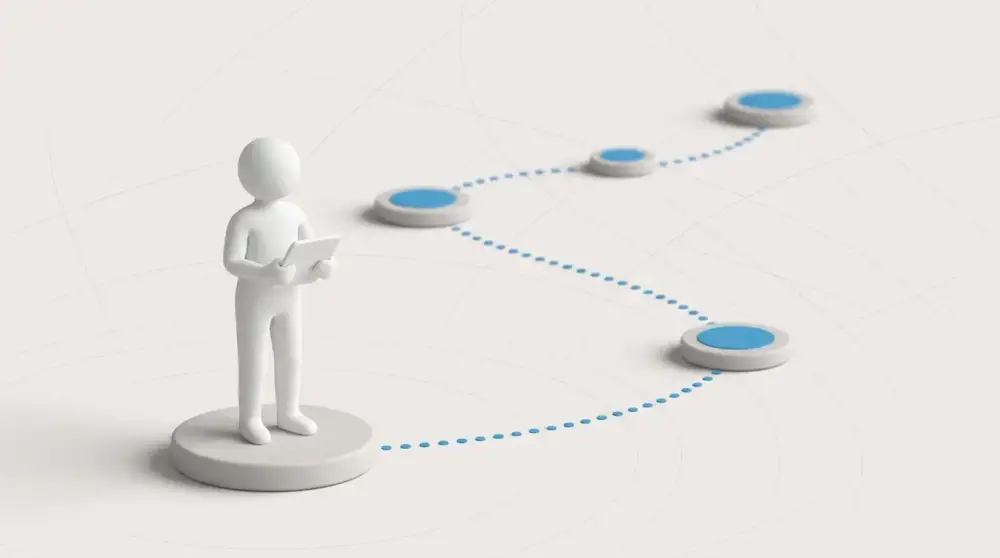
"If we build a portal, what is left for us?" The first person to ask that is rarely the sales manager. It is the rep in the field, and the question is fair: no team helps a system that is going to take over part of their job.
Looking for the answer in the product's feature list does not work. The answer lives in how commission is credited and in what a route visit is spent on.
"The portal replaces the rep"
It does not, because the two are not doing the same job. The portal takes repeat orders: the lines the dealer already knows and reorders the same way every month. Those lines are also what consumes most of a rep's day. Introducing a new product group, discussing shelf layout, resolving an overdue balance face to face, and seeing what a competitor is doing on the ground are not things a portal can do.
"If the dealer keys it themselves, what happens to my commission?"
This is the most important question in the project, and it is a commercial decision rather than a technical one. If an order placed on the portal is credited to the rep who owns that dealer, most of the objection disappears. When the commission model follows the dealer portfolio rather than the order channel, reps stop seeing the portal as a rival and start seeing it as something that extends their own revenue past office hours.
When the same order can come from two places
Reps should be able to place orders on behalf of a dealer; it is one of the most used functions during a visit. But the record has to hold two separate facts: who the order is for, and who entered it. That distinction settles both the commission calculation and the question of who to go back to when something is wrong.
When there is no connection in the field
Some visits happen where coverage is poor. The rep's app has to be able to build a draft order from the last prices and stock it pulled, and then submit that draft against current prices once the connection returns. Not treating the draft as a firm order is a deliberate choice: it stops anyone promising a dealer an out-of-date price.
The visit changes shape
A visit spent writing an order becomes something else once the portal is live. The rep arrives already knowing which product group this dealer has not bought in three months, which campaign they missed, and how much of their balance is past due. The agenda stops being order taking and becomes a conversation about what this dealer has been leaving on the table.
The transition period
The healthiest rollout is the one where reps introduce the portal to their own dealers. When the field team treats the system as their tool, dealer-side adoption follows; without that, you are relying on an email being opened. The moment the channel has really changed is the moment a rep walks into a visit not with an order pad, but to go through the dealer's saved order list with them.
Tags :
field sales
field rep
dealer portal
commission model
route planning
order ownership
Recent Articles
Dealer Portal
Dealer Portal
What Two-Way ERP Sync Actually Means
Oct 20, 2024
Dealer Portal
Putting the Account Statement and Credit Limi...
Oct 17, 2024
Dealer Portal
How Dealer-Specific Pricing Is Actually Struc...
Sep 20, 2024
Digitalisation